Rule 15: Removing Loose Objects

What this is about
Rule 15 covers loose things near your ball: twigs and leaves (loose impediments) and items like a rake or bottle (movable obstructions). You're usually free to remove these.
What you need to do
- You may remove loose impediments, such as leaves, twigs, and small stones, anywhere.
- Does your ball move as a result? One penalty stroke, and you replace the ball. That's free of penalty on the green and on the teeing area.
- You may remove movable obstructions, such as a rake, bottle, or towel, anywhere.
- Does your ball move as a result? No penalty, just replace it.
- Is your ball in or on a movable obstruction? Lift the ball, remove the obstruction, and drop, free of penalty, within one club-length of the point directly below where your ball lay, not nearer the hole and in the same area of the course.
- Note: leave tee-markers in place while you're playing from that teeing area. And you may never remove something to influence a ball in motion.
Common mistake
Thinking you always get a penalty if your ball moves. With a movable obstruction that's free of penalty; with a twig or leaf it isn't. That difference matters.
Example
You brush leaves away next to your ball and it rolls a little: one penalty stroke, and you replace it. If your ball is in a plastic bag, you lift it, remove the bag, and drop it free of penalty.

Practise this rule with real exam questions in the free app.
15.1 Loose impediments
15.1a Removing loose impediments
Anywhere on and off the course, you may remove loose impediments without penalty, such as leaves, twigs, stones, and loose divots. You can do this in any way: with your hand, foot, club, or anything else.
Two exceptions:
- Before you replace a ball (except on the green), you may not remove a loose impediment that would likely have caused your ball to move. Penalty: one penalty stroke.
- You may not remove a loose impediment to influence a ball in motion (Rule 11.3).
15.1b Ball moved when removing a loose impediment
If your ball moves because you remove a loose impediment, place it back on its original spot. If your ball wasn't on the putting green or the teeing area, you also get one penalty stroke.
15.2 Movable obstructions
15.2a Taking relief from movable obstructions
A movable obstruction is a movable artificial object. You may remove it anywhere without penalty, in any way. Exceptions: tee-markers once your ball is in play in the teeing area, and removing objects to influence a ball in motion.
If your ball lies in or on a movable obstruction off the green, lift it, remove the obstruction, and drop within one club-length of the point directly below where your ball lay, not nearer the hole and in the same part of the course. On the green, place the ball at that spot.
15.2b Ball not found in a movable obstruction
If it's known or virtually certain that your ball is in or on a movable obstruction, but you can't find it, you may take free relief. The reference point is the estimated spot directly below where your ball last crossed the edge of the obstruction. If you're not sure, stroke and distance applies (Rule 18.2).
15.3 Ball or ball-marker helps or interferes with play
15.3a Ball on the putting green helps the play
If you think a ball on the putting green could help someone's play, for example as a backstop near the hole, you may mark and lift your own ball, or ask another player to do so. In stroke play, you may instead play first. If players agree to leave a helping ball in place, they both get two penalty strokes.
15.3b Ball interferes with play
If another player's ball interferes with your play, for example your stance, swing or line of play, or lies close enough to be distracting, you may ask that player to mark and lift their ball.
15.3c Ball-marker helps or interferes with play
If a ball-marker helps or interferes with play, you may move it aside, or ask the other player to do so. You move the marker one or more clubhead-lengths to the side, then put it back on the original spot afterward.
Practice questions about Rule 15
You're on the putting green and a leaf is lying on your putting line. You decide to carefully brush the leaf away. In doing so, you accidentally move your ball. What's the correct procedure under the Rules of Golf?
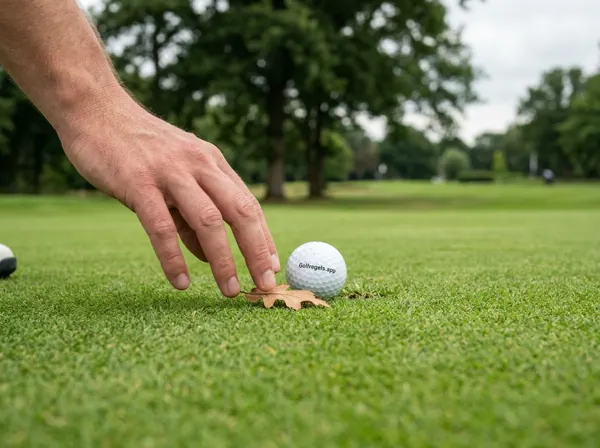
Answer: You get no penalty and must replace the ball on its original spot.
A leaf is a loose impediment that you may remove. If your ball moves as a result on the putting green, there's no penalty and you replace it (Rule 15.1b and 13.1d). Off the green, this would cost one penalty stroke.
Your ball lies under a movable fence (movable obstruction). What do you do?
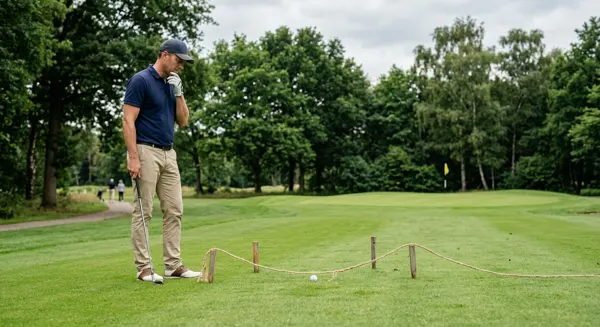
Answer: Move the fence without penalty
You may remove a movable obstruction without penalty. If the ball moves as a result of the removal, you replace it.
Your ball is on the putting green and your fellow player asks you to mark it. Do you have to do that?

Answer: Yes, if asked you must mark and lift your ball
If your ball is in the way on the putting green, another player may ask you to mark and lift it (Rule 15.3b). In that case you must do so.
A player is standing in the rough and wants to remove a small stone lying right in front of their ball. While removing it, the ball moves. What's the correct procedure and penalty?
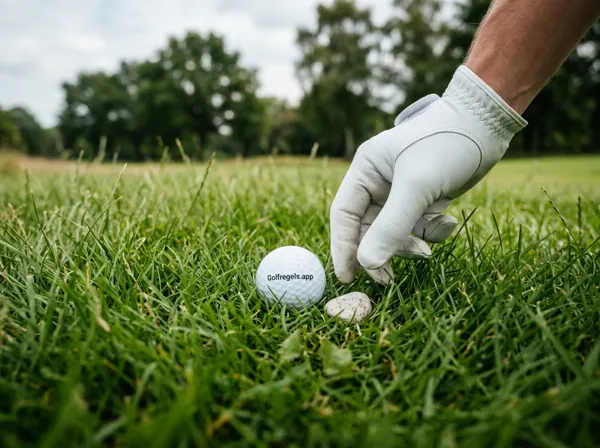
Answer: The player gets one penalty stroke and must replace the ball on its original spot.
A small stone is a loose impediment you may remove anywhere. If your ball moves as a result in the rough, you get one penalty stroke and replace the ball on its original spot (Rule 15.1b and 9.4b).
Your ball is on the putting green and a fellow player asks you to mark it. Do you have to do that?

Answer: Yes, if your ball is on another player's line of play or line of putt, you must mark it
If your ball is on another player's line of play or line of putt, you must mark and lift it if that player asks. This way you won't interfere with their stroke.